

.png?width=50&height=50&name=Stillwater_LogoOnly%20(Black).png)
Most of what you'll find online about living through a renovation falls into one of two categories: cheerful listicles promising five easy tips, or horror stories from a forum thread that make you want to cancel the whole project. Neither is particularly useful when you're the one trying to figure out how your family is actually going to get through the next several months.
The truth sits in between. A renovation, whether you stay in the home while it happens or move out for part of it, is genuinely disruptive, and genuinely affects the budget beyond the construction line items. It also doesn't have to be the chaotic, relationship-testing ordeal it's sometimes made out to be. The difference usually comes down to whether anyone set honest expectations with you, financial and otherwise, before the first wall came down.
This is our attempt at that honesty.
Timelines
Every renovation starts with a schedule, and almost every schedule shifts. Permits take longer than the municipality's posted timelines suggest. A structural surprise behind an old wall changes the sequence of work. A specific tile or fixture is backordered. None of this means the project is going badly. It means a renovation is, by nature, a process of discovering things as you go, especially in older Victoria homes where what's behind the walls doesn't always match the drawings.
What actually matters isn't whether the schedule shifts. It's whether you were set up to expect it, and whether it affects you when it does. In pre-construction, we build schedule contingency directly into the project plan — not as a vague disclaimer, but as a real buffer that accounts for permit timelines, sequencing dependencies, and the kind of discoveries that are common in Greater Victoria's older housing stock. When a delay happens within that contingency, it's absorbed. When it goes beyond it, you hear about it promptly and with a clear explanation, not after the fact.

What "Staying In the Home" Actually Means
Some renovations are contained enough that life continues mostly as normal: a bathroom reno at the far end of the house, an addition that doesn't touch the existing structure until late in the build. Others, particularly a kitchen renovation or a project that touches your main living spaces, will genuinely change how you live for a while.
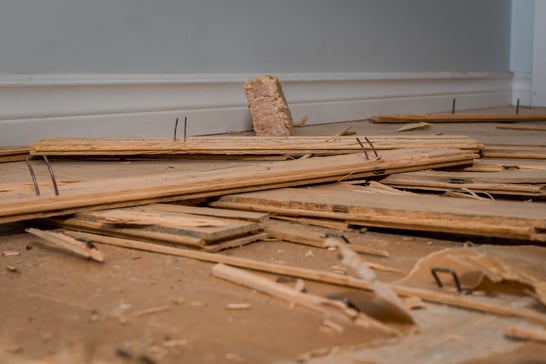
This usually means a kitchen reduced to a folding table, a microwave, and a cooler for longer than you'd like. It means dust, even with proper containment, finding its way further than you'd expect, especially during demolition. It means noise during working hours, and a crew that needs a clear path through your home to get materials and tools where they're going. None of this is a sign that something has gone wrong. It's what real construction looks like at close range.
What separates a manageable disruption from an exhausting one is containment and communication: plastic sheeting and dust barriers that are actually maintained, a consistent daily start and end time, and a project manager who tells you what to expect for the coming week rather than leaving you to guess. If a temporary kitchen setup or a clear daily schedule isn't something your builder raises proactively, it's worth asking for before the project starts.
Read more: How much does a home renovation cost in Victoria BC?
The Costs
Most renovation budgets account for the construction itself, and not much else. The cost of actually living through the project, whether you stay in the home or move out for part of it, tends to get treated as an afterthought, if it's accounted for at all. It's worth budgeting for deliberately, because it's rarely small.
If you relocate for any part of the project, even temporarily, that's a real added cost: a short-term rental, extended stays with family, or month-to-month furnished housing if the timeline is uncertain. Storage for furniture and belongings is its own line item, especially for a full home renovation. If you're staying in the home but your kitchen is out of commission for a stretch, dining out and takeout costs climb quickly and quietly. Families who track it afterward are often surprised by the total, simply because it accumulated a hundred dollars at a time rather than arriving as one obvious bill.
None of this means you should expect financial surprises. It means these costs deserve a place in your planning conversation from the start, alongside the construction budget. In pre-construction, we work a cost contingency into the project budget and walk clients through what their living situation will actually look like month to month; temporary housing, storage, the meals out, so none of it arrives as a gap in the numbers halfway through. The contingency is planned for, not hoped away.
Read more: What is a cost-plus builder and why does it matter in Greater Victoria?
The Decisions That Keep Coming
People expect the big decisions: the layout, the cabinetry, the fixtures. What catches most homeowners off guard is how many smaller decisions keep showing up after construction starts. A product gets discontinued and needs a substitute. An unexpected condition behind a wall changes a detail. A trade asks a question about an outlet height that nobody thought to specify.
This is normal, and a thorough pre-construction process reduces how often it happens, but it doesn't eliminate it entirely. No amount of planning removes every variable from a renovation. What good planning does is make sure that when a decision does come up mid-build, you're choosing between two reasonable options with a clear cost attached, rather than being told after the fact what was decided for you.
What Actually Helps Families Get Through It
The families who come through a renovation feeling good about the experience, not just the result, tend to have a few things in common. They had one point of contact, not a rotating cast of people to chase down for answers. They knew, roughly, what each week would bring, even when the answer was "this week is mostly mechanical work, you won't see much visible progress." They protected one space in the home, even a single room, as a retreat from the disruption, and everyone involved respected that boundary.
If you have kids, it helps to be honest with them in age-appropriate terms about what's happening and roughly how long it will last, rather than letting the noise and mess feel open-ended. Construction is more tolerable when there's a finish line, even a moving one, than when it feels indefinite.
The Part That's Easy to Forget in the Middle of It
Somewhere around week six or eight of a kitchen renovation, eating dinner standing at a folding table, it's easy to lose sight of why you started. This part is temporary. The home you're building toward is not. Every family we've worked with who stayed in their home through a renovation has told us some version of the same thing afterward: it was harder than they expected in the moment, and entirely worth it once they were living in the finished result.
That doesn't make the disruption smaller while you're in it. It just means it's worth naming, clearly, at the start: this will be genuinely inconvenient for a while, and that's a fair trade for the home on the other side of it, not a flaw in the process.
If you're planning a renovation in Greater Victoria or the Gulf Islands and want an honest sense of what your specific project will actually be like to live through, we'd be glad to talk it through.
Stillwater Custom Homes & Renovations builds custom homes and renovations across Greater Victoria, the Saanich Peninsula, and the Gulf Islands. We are a licensed BC builder and registered member of Passive House Canada.
Frequently Asked Questions
Should we move out during a renovation, or stay?
It depends on the scope, your tolerance for disruption, and what each option costs. A full kitchen renovation or a project touching most of the main floor is often easier to live through if you can relocate, even temporarily, especially with young children, but that comes with added rental and storage costs to weigh against the convenience. A more contained project, like a single bathroom or a basement reno, is usually manageable while staying put, with dining-out costs as the more likely budget impact. We'll give you an honest read on your specific project, including the cost trade-offs, during pre-construction rather than a generic rule.
How much should we budget for living costs on top of the construction budget?
It varies widely depending on scope and whether you relocate, but it's rarely negligible. Temporary housing, storage, and increased dining-out costs while a kitchen is out of commission can add up to a meaningful figure over a multi-month project. We'd rather walk through a realistic estimate of these costs with you during planning than have them surface as a surprise partway through.
How much will dust and noise actually affect daily life?
More than most people expect during demolition and framing, less than feared once the project moves into finishing work. Proper containment (sealed plastic barriers, negative air pressure where needed, and consistent daily cleanup) keeps it manageable, but it doesn't disappear entirely. We set expectations on this before work begins so it doesn't come as a surprise partway through.
How do we know if a delay is normal or a sign of a problem?
Some shift in timeline is normal on almost every renovation, particularly in older Victoria homes where conditions behind walls aren't always known until they're opened up. The sign of a well-run project isn't the absence of delays. It's whether you're told about them promptly, with a clear explanation of cause and impact, rather than finding out on your own.
What can we do to make this easier on our family?
Set a realistic mental timeline that includes some buffer, protect one space in the home as off-limits to the disruption, and ask your builder for a clear weekly update rather than waiting for surprises. Kids tend to do better with honest, simple explanations of what's happening and how long it will last than with vague reassurance.
.jpg?width=520&height=294&name=Untitled%20design%20(36).jpg)
.jpg?width=520&height=294&name=Untitled%20design%20(39).jpg)