

.png?width=50&height=50&name=Stillwater_LogoOnly%20(Black).png)
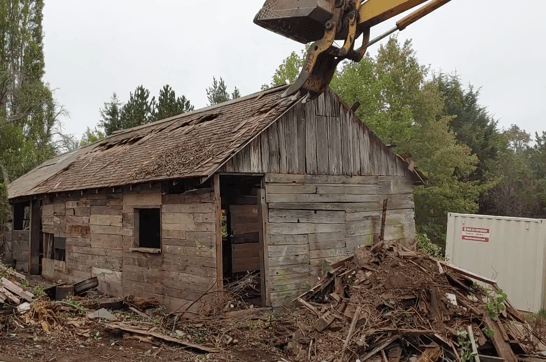
In a market where vacant, build-ready land is scarce and expensive, more of our clients are arriving at the same conclusion from a different direction: buy a property with an existing home on it, and build new. It's a strategy that makes real sense in established Greater Victoria neighbourhoods like Oak Bay, Fairfield, and Gonzales, where the lots are excellent and the housing stock is often older than what a family actually needs.
It's also a decision people arrive at without much honest information. This is our attempt to walk through what actually drives that choice, and what it costs.
Why a Teardown Can Make More Sense Than Raw Land
Vacant lots in Greater Victoria currently range from around $500,000 to well over $8 million for oceanview or waterfront properties, and most vacant land still carries municipal lot development charges on top, typically between $15,000 and $50,000, for connecting to water, sewer, and road infrastructure.
A property with an existing structure often sidesteps a meaningful part of that cost. Demolition typically runs between $15,000 and $50,000, and in many cases that's still less expensive than preparing raw land from scratch. More importantly, you frequently inherit infrastructure that's already in place: utilities stubbed in, a driveway, cleared ground. That existing foundation of services can reduce both your build cost and your timeline, which is part of why this approach has become more common in established neighbourhoods where good lots rarely come up empty.

When Renovating Makes More Sense Than Demolishing
Not every older home should come down. If the existing structure is sound, the layout is close to workable, and the home's character is part of what drew you to the property in the first place, a renovation or addition can often get you most of the way to what you want at a lower cost and with less disruption to the site.
The decision usually comes down to a few honest questions. Is the existing foundation and structure genuinely sound, or does it need extensive work regardless? Does the current layout have any real relationship to how you want to live, or would you be fighting it the entire way? And does the lot itself, its size, orientation, and what the municipality allows on it, actually support the home you're trying to build, or is the existing structure the limiting factor? If the honest answer to that last question is the lot itself, a teardown is usually the more direct path.
Read more: Should You Build New or Renovate?
What Demolition Actually Involves
Demolition isn't just knocking a building down. Before anything is removed, the property needs to be assessed for hazardous materials such as asbestos or lead paint, which are common in homes built before the 1990s and require specialized removal before demolition can proceed. Utilities need to be safely disconnected and capped. In some cases, portions of the existing foundation or utility connections can be preserved and reused, which is worth having assessed before demolition begins rather than after.
Permits are required for demolition itself, separate from the permits for the new build that follows, and municipalities in Greater Victoria have their own requirements around notice, tree protection, and erosion control during the process. None of this is complicated, but all of it needs to happen in the right order, which is exactly the kind of sequencing a proper pre-construction process is built to manage.
The Costs That Come After the Demolition Itself
Demolition cost is only the first number. Once a structure is removed, the lot still needs the same site preparation any build requires: grading, drainage, and any tree clearing or utility work the new home's footprint demands. Depending on slope, drainage, soil conditions, and utility connections, site preparation can range from $10,000 to $300,000. Some of this may already be simplified by what the previous structure left behind, but it's worth budgeting for as its own line item rather than assuming the existing lot is fully ready simply because something was built there before.
Read more: How to Evaluate a Lot Before Building in Victoria BC
What This Means for Your Timeline
A teardown adds a phase to your project that a vacant lot doesn't require, but it's usually a matter of weeks, not months, when it's planned properly. The bigger timeline factor is usually the permitting sequence: securing demolition approval, completing the demolition, and then moving into the design and permitting process for the new home. Planning both of these in the same pre-construction phase, rather than treating demolition as a separate project that happens before you've engaged a builder, is what keeps a teardown from adding unnecessary delay.
Where to Start
If you're weighing a property with an existing home against a vacant lot, or you already own a property and are trying to decide whether to renovate or demolish, we'd be glad to walk through what actually makes sense for your specific site and goals.
Stillwater Custom Homes & Renovations builds custom homes and renovations across Greater Victoria, the Saanich Peninsula, and the Gulf Islands. We are a licensed BC builder and registered member of Passive House Canada.
Frequently Asked Questions
How much does it cost to demolish a house to build new in Victoria, BC?
Demolition typically runs between $15,000 and $50,000, depending on the size and condition of the existing structure and whether hazardous materials like asbestos need to be professionally removed first. In many cases, this is still less expensive than preparing raw land from scratch, since you often inherit existing utility connections, a driveway, and cleared ground.
Is it cheaper to buy a property to tear down than to buy vacant land?
Often, yes. Vacant lots in Greater Victoria typically carry municipal lot development charges of $15,000 to $50,000 on top of the purchase price, for connecting to water, sewer, and road infrastructure. A property with an existing home frequently already has those connections in place, which can offset some or all of the demolition cost.
Do I need a separate permit to demolish a house?
Yes. Demolition permits are separate from the building permits for the new home that follows, and municipalities in Greater Victoria have their own requirements around notice, tree protection, and erosion control during demolition. A hazardous materials assessment is also typically required before demolition can proceed on any home built before the 1990s.
How do I decide whether to renovate or demolish an existing home?
It usually comes down to whether the existing foundation and structure are genuinely sound, whether the current layout has any real relationship to how you want to live, and whether the lot itself supports the home you actually want to build. If the lot is the asset and the existing structure is the limiting factor, a teardown is usually the more direct path.
Does tearing down a house add significant time to a custom home build?
Usually a matter of weeks, not months, when it's planned as part of the same pre-construction process rather than treated as a separate project. The bigger timeline factor is typically the permitting sequence for both the demolition and the new build, which is why planning both together from the start matters.
.jpg?width=520&height=294&name=Untitled%20design%20(36).jpg)
.jpg?width=520&height=294&name=Untitled%20design%20(39).jpg)